

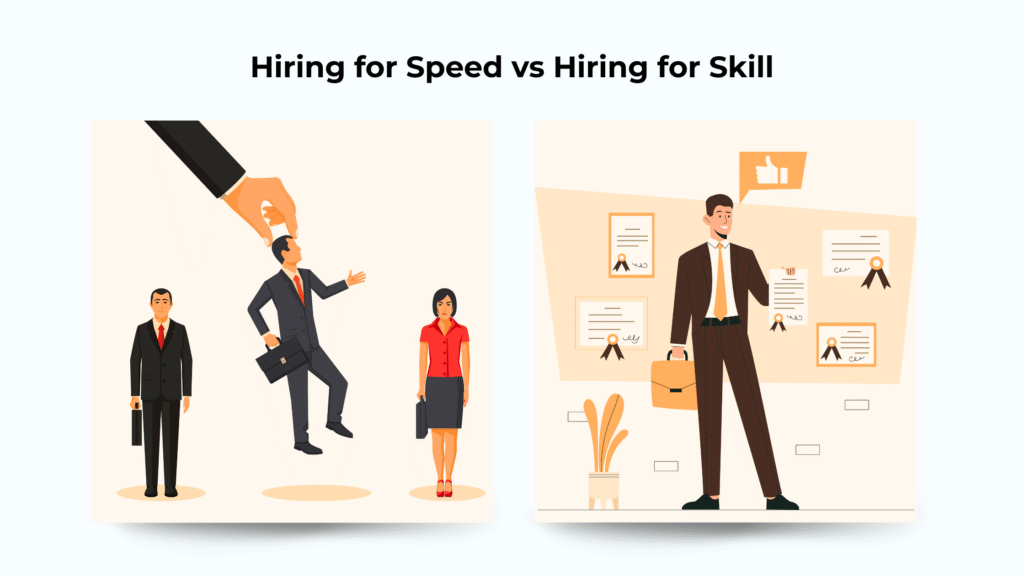
In an increasingly digital-first business environment, IT hiring has moved from being a support function to a strategic priority. The quality and timing of technology talent directly influence product delivery, system stability, innovation, and customer experience. As organizations race to keep up with evolving technologies and market demands, a critical question continues to surface: is it better to hire quickly or to hire for depth of skill?
Both approaches serve valid business purposes, yet each comes with trade-offs. Hiring too fast can introduce quality risks, while hiring too slowly can stall growth and execution. This article takes a refined, analytical look at hiring for speed versus hiring for skill, helping organizations identify the right approach based on urgency, scalability, and long-term performance objectives.
The Business Context Behind IT Hiring Decisions
IT hiring does not occur in a vacuum. It is influenced by project timelines, funding cycles, client expectations, and technology roadmaps. In high-growth markets like Gurugram and the broader NCR region, competition for skilled professionals further complicates decision-making.
Organizations working with an experienced IT recruitment agency in Gurugram often face varying hiring scenarios—ranging from urgent project-based needs to long-term platform development. Understanding the intent behind a role is the first step in choosing the right hiring strategy.
Hiring for Speed: Meeting Immediate Business Demands
Hiring for speed is driven by urgency. When project deadlines are tight or business continuity is at risk, organizations prioritize reducing time-to-fill over exhaustive evaluation. This approach focuses on candidates who can be onboarded quickly and become productive with minimal ramp-up time.
Speed-based hiring is typically adopted during:
- Sudden project kick-offs or delivery escalations
- Rapid team expansion during growth phases
- Short-term or contract-driven assignments
- Unexpected attrition in critical roles
Many organizations rely on the Best Tech staffing company Gurgaon to access ready-to-deploy talent pools, allowing them to move quickly without restarting the hiring process from scratch.
Strengths of Speed-Oriented Hiring
The primary advantage of hiring quickly is operational continuity. Vacant IT roles can disrupt workflows, overburden existing teams, and delay releases. Faster hiring minimizes these risks and helps maintain momentum.
From a financial standpoint, reducing vacancy durations can significantly lower indirect costs such as lost productivity and delayed revenue. Data across IT services and product companies consistently shows that prolonged vacancies in technical roles often have a higher business cost than slightly increased recruitment spend.
Speed hiring also supports agility. In environments where technology requirements change rapidly, organizations benefit from bringing in professionals with immediate, hands-on experience in specific tools or frameworks.
Limitations of Hiring Too Fast
Despite its advantages, hiring for speed carries measurable risks. Shortened assessment cycles may overlook deeper competencies, adaptability, or cultural alignment. While a candidate may meet immediate technical needs, they may struggle as responsibilities evolve.
Over-reliance on fast hiring can also lead to higher turnover. Data indicates that mismatched hires are more likely to exit within the first year, increasing rehiring costs and team instability. Over time, this reactive approach can weaken internal capability building.
This makes it critical for organizations to clearly define when speed is essential—and when it may compromise long-term outcomes.
Hiring for Skill: Investing in Long-Term Capability
Hiring for skill takes a more strategic and future-oriented approach. Rather than focusing solely on immediate output, this model emphasizes technical depth, learning agility, and alignment with the organization’s long-term technology vision.
Skill-focused recruitment typically involves:
- Comprehensive technical evaluations
- Assessment of problem-solving and system-thinking abilities
- Evaluation of learning potential and adaptability
- Strong emphasis on cultural and organizational fit
Organizations seeking sustainable growth often partner with a Top IT placement firm in Gurugram to identify high-impact professionals capable of contributing beyond their immediate role.
Advantages of Skill-Centric Hiring
The most significant benefit of skill-based hiring is long-term performance. Highly skilled professionals tend to deliver greater value over time by improving processes, mentoring teams, and driving innovation. Their impact often extends beyond individual projects to overall system reliability and scalability.
Retention is another key advantage. When roles are aligned with an employee’s expertise and growth aspirations, engagement levels are typically higher. Data-backed studies show that employees hired for skill alignment demonstrate stronger commitment and lower long-term attrition.
Additionally, organizations with strong internal expertise reduce dependency on constant external hiring, leading to more stable and cost-effective workforce structures.
Challenges in Skill-Focused Recruitment
The primary challenge with hiring for skill is time. Longer hiring cycles can strain delivery timelines, particularly in competitive markets where top talent has multiple offers. Extended evaluation processes also increase the risk of candidate drop-off.
There is also the risk of misalignment if future skill requirements are not clearly defined. Hiring deep expertise without a clear roadmap can result in underutilized talent.
This is where structured guidance from an experienced IT hiring agency in Delhi NCR becomes valuable—helping organizations align hiring decisions with both immediate needs and future technology plans.
What the Data Says: Speed vs Skill
Industry data provides clarity on when each approach is most effective:
- Speed-based hiring works best for contract roles, short-term projects, and technologies with a large available talent pool.
- Skill-focused hiring delivers higher ROI for core engineering, architecture, cybersecurity, and data roles.
- Organizations that deliberately combine both approaches report better scalability and lower overall talent costs.
Rather than viewing speed and skill as competing strategies, high-performing organizations integrate both within a unified workforce plan.
The Role of Workforce Flexibility
Modern IT hiring strategies increasingly rely on flexible workforce models to balance urgency with quality. Contract staffing, hybrid teams, and project-based engagements allow companies to respond quickly without diluting long-term standards.
By leveraging Flexible workforce solutions Gurugram, organizations can:
- Scale teams based on project demand
- Access specialized expertise without long-term overhead
- Maintain delivery speed while protecting core team quality
This hybrid approach allows businesses to reserve skill-intensive hiring for strategic roles while using fast hiring to manage workload fluctuations.
Choosing the Right Hiring Approach
Selecting the right hiring strategy depends on three critical factors:
- Urgency
When delays directly affect revenue or client commitments, speed becomes the priority. - Scalability
Rapid expansion requires a balance of quick hires and long-term skill investments. - Long-Term Impact
Roles tied to innovation, system stability, or leadership benefit most from skill-focused recruitment.
Organizations that assess these dimensions upfront are better equipped to make informed hiring decisions rather than reacting under pressure.
Designing a Balanced IT Hiring Model
Leading organizations do not choose between speed and skill—they design systems that accommodate both. This requires close coordination between business leaders, HR teams, and recruitment partners.
A balanced hiring model includes:
- Pre-built talent pipelines for urgent needs
- Skill mapping aligned with future technology goals
- Data-driven evaluation of hiring outcomes
- Continuous adjustment based on business priorities
When hiring decisions are proactive rather than reactive, talent becomes a strategic advantage rather than a recurring challenge.
Conclusion
Hiring for speed and hiring for skill are not opposing philosophies; they are complementary tools within a mature IT hiring strategy. Speed ensures continuity and responsiveness, while skill builds resilience, innovation, and long-term performance.
In a rapidly evolving technology landscape, organizations that adopt a flexible, data-driven approach to hiring are better positioned to scale sustainably. By aligning urgency with capability building and partnering with experts like Lyftr Talent Solutions, businesses can create IT teams that deliver today while being prepared for tomorrow.